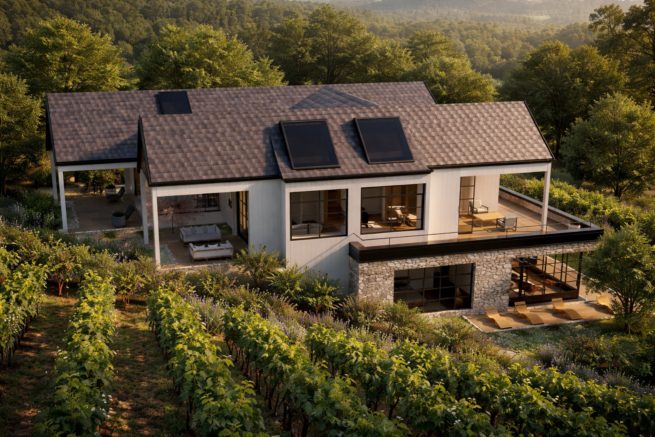
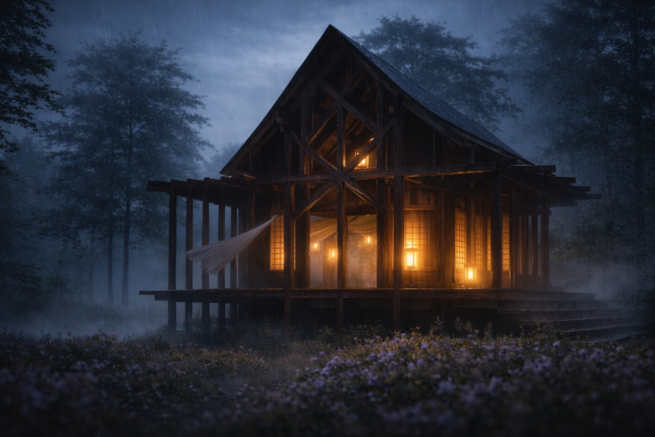
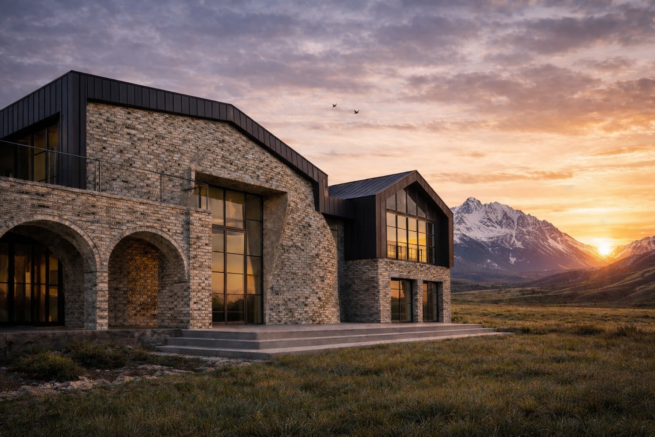
Vineyard House.
A sanctuary of glass and light engineered to redefine luxury through
net-positive building science and high-fidelity engineering.
Structure
CFS & ICF
CFS & ICF
Energy
Net-Positive
Net-Positive
Precision
±0.85mm
±0.85mm

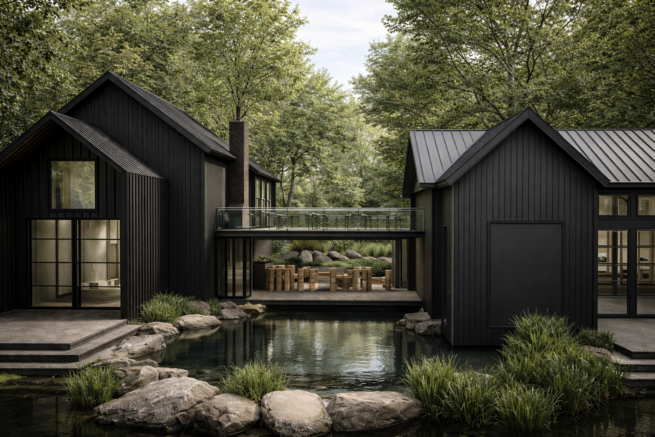
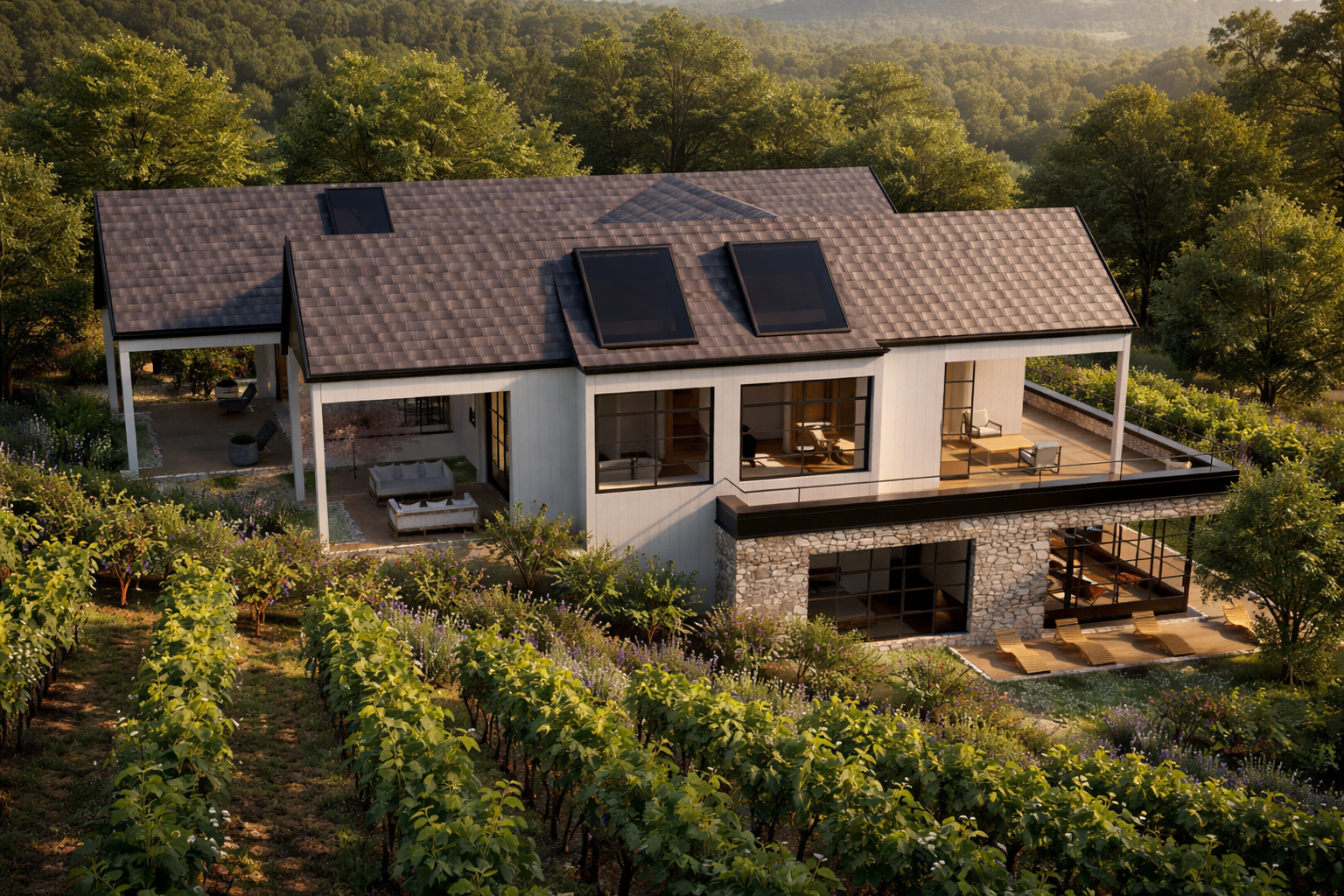
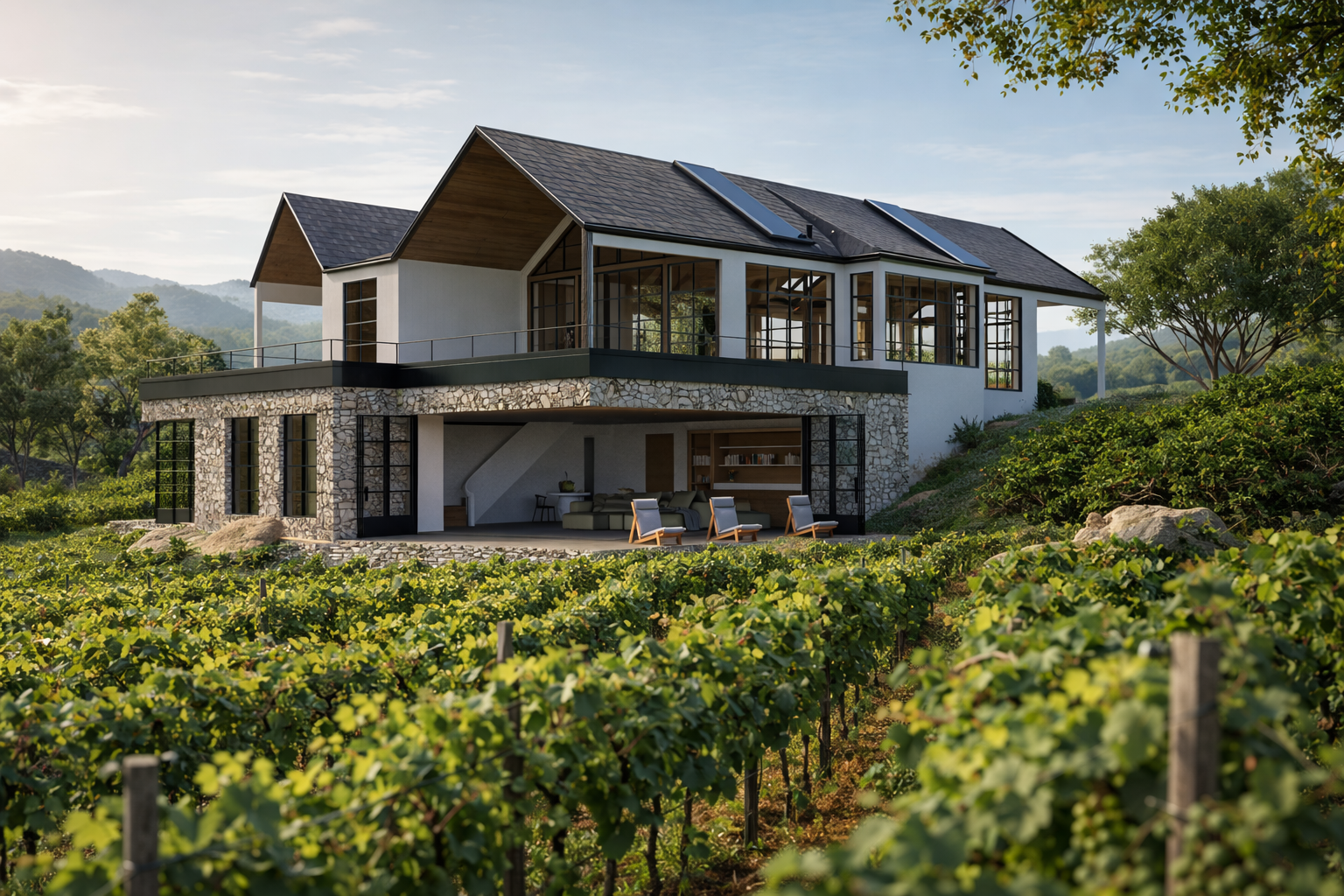
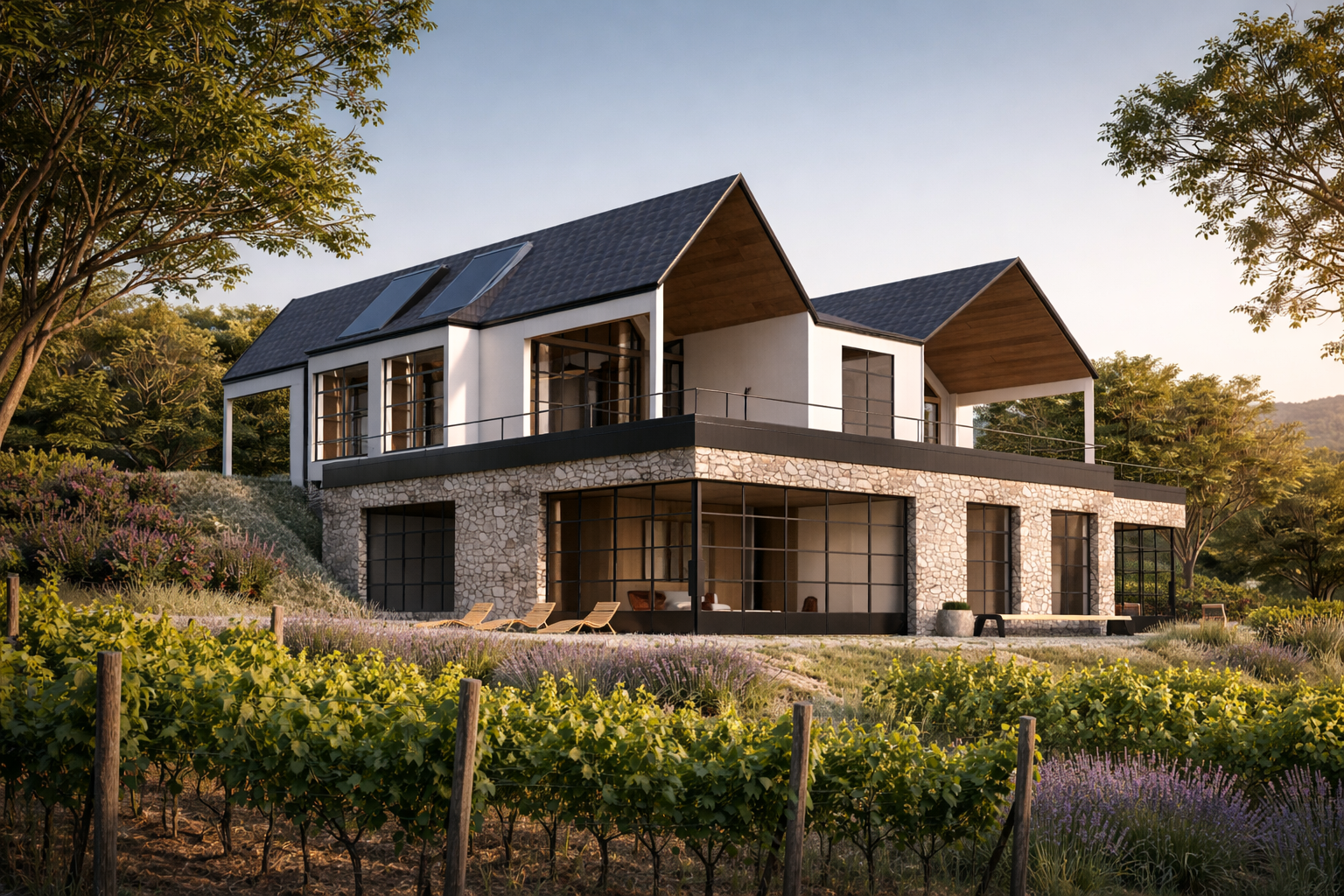
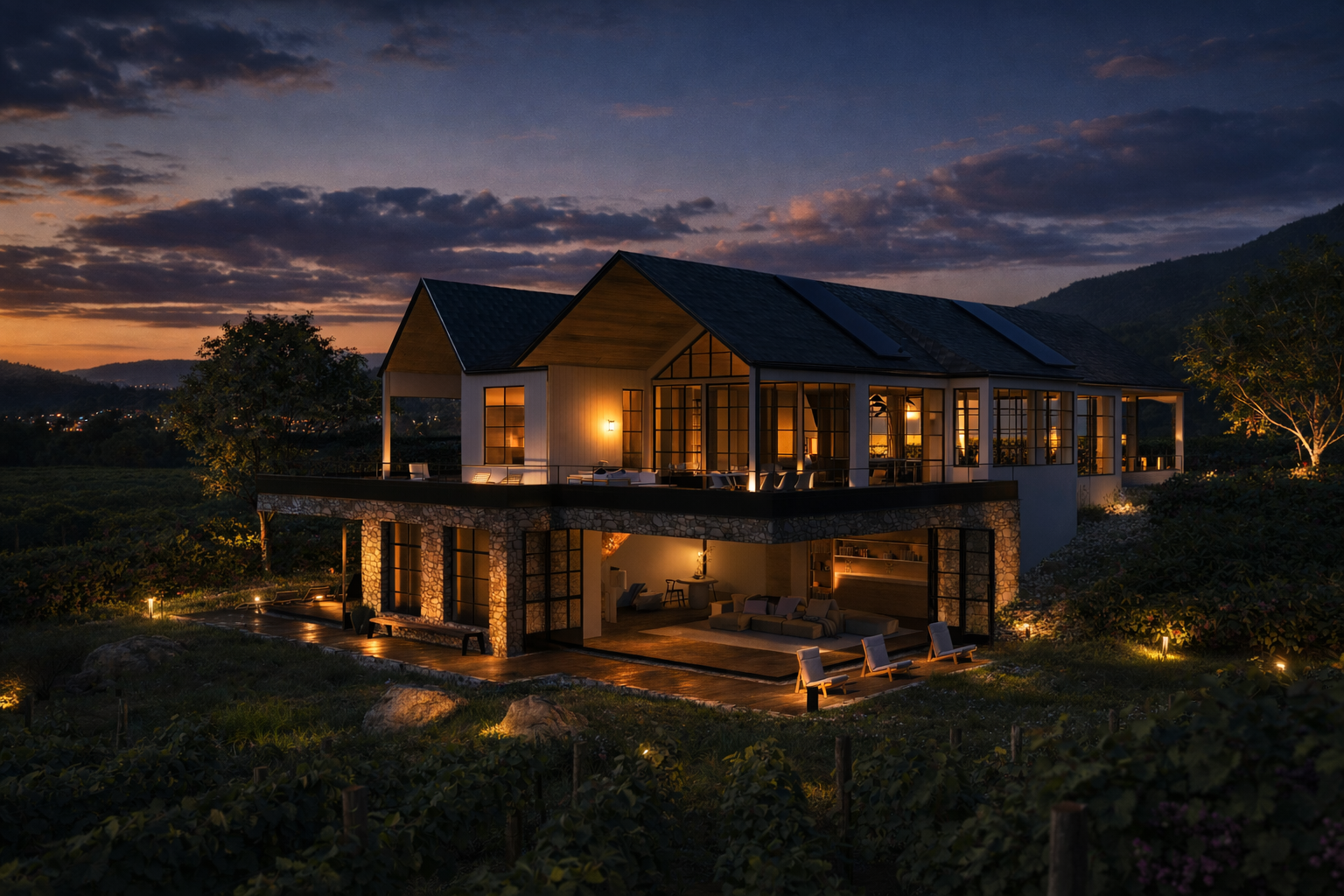
Architecture | A sanctuary of glass and light engineered with net-positive building science and FRAMECAD precision steel framing to redefine sustainable luxury.
A sanctuary of glass and light engineered to redefine luxury through
net-positive building science and high-fidelity engineering.
Architectural Logic
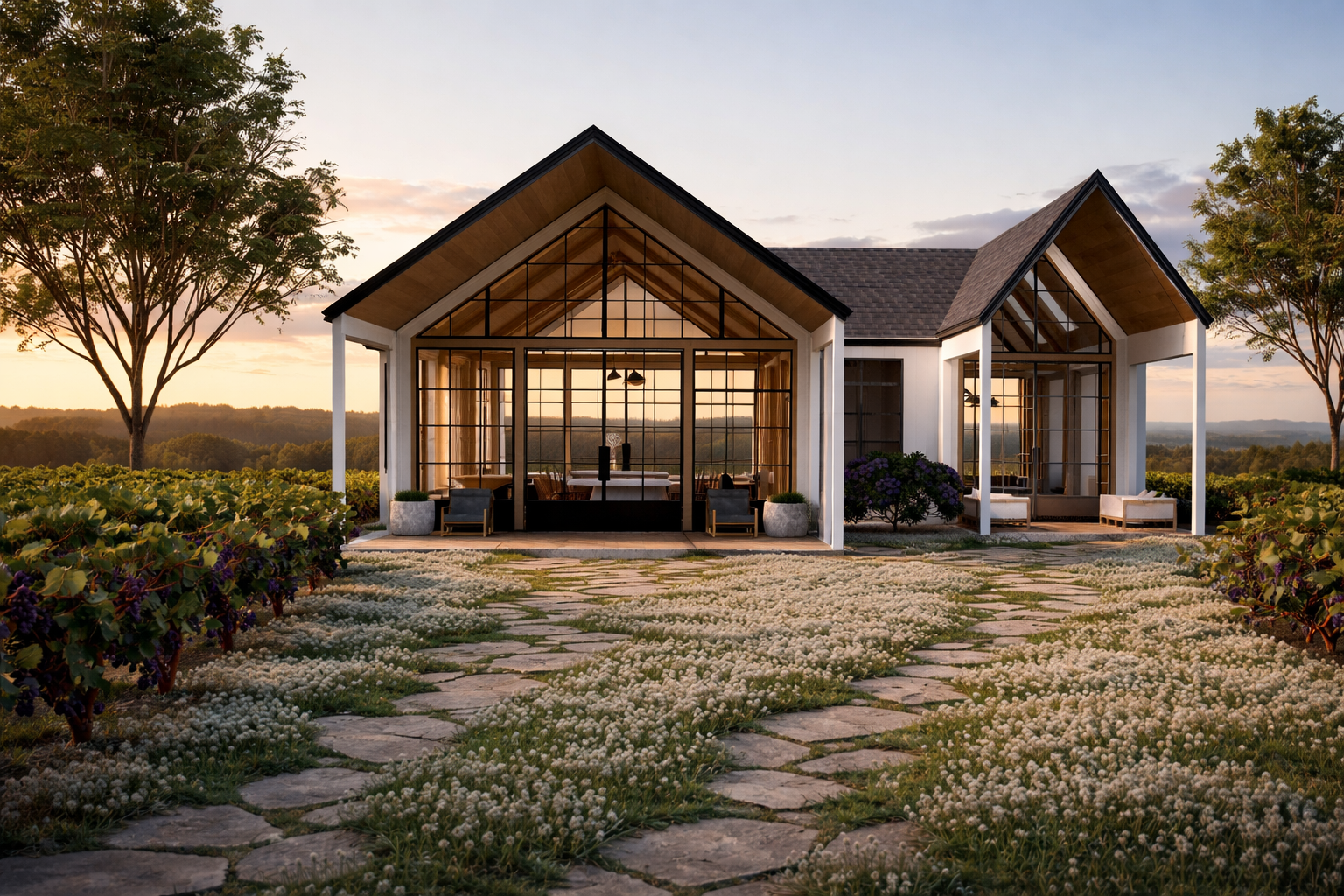
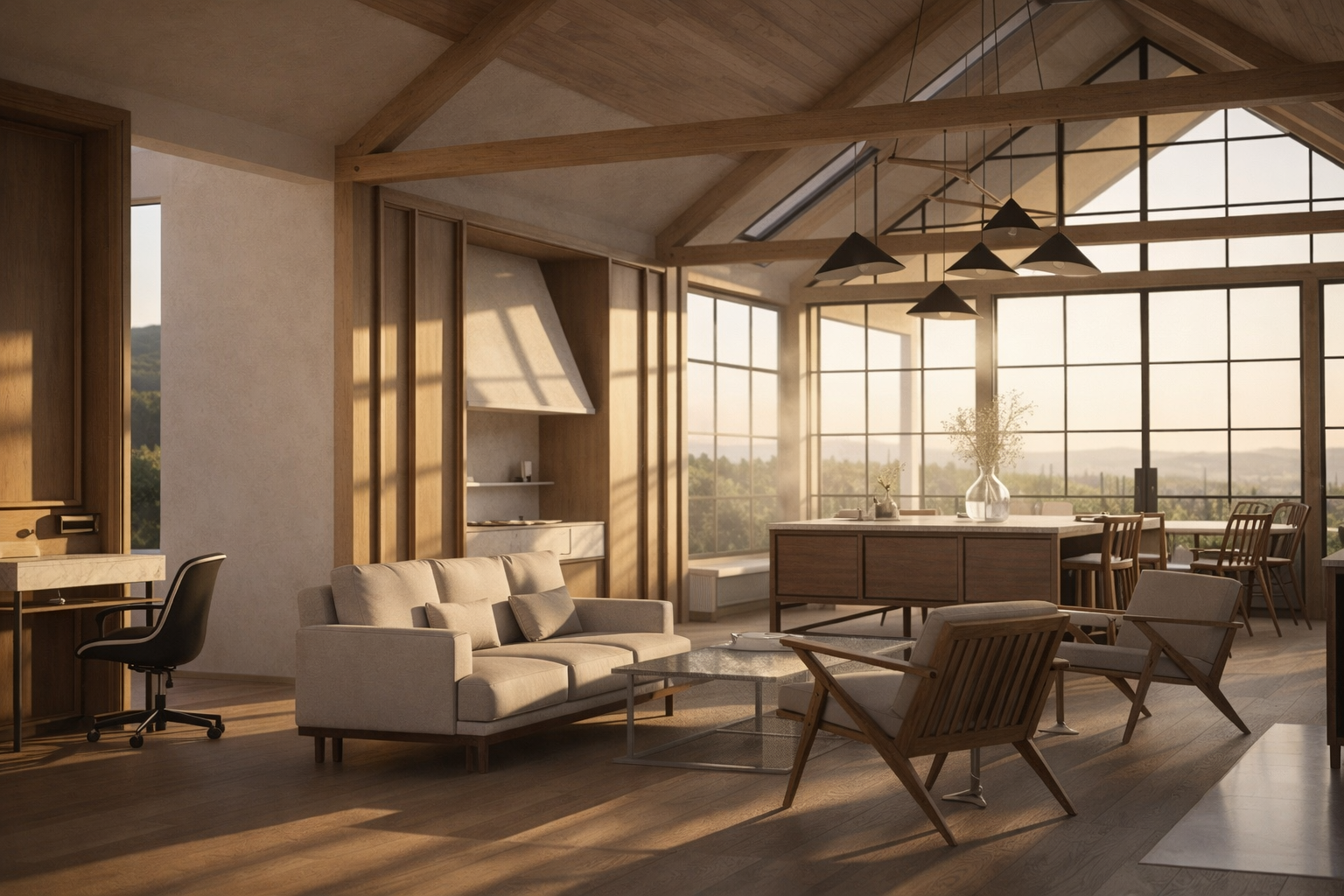
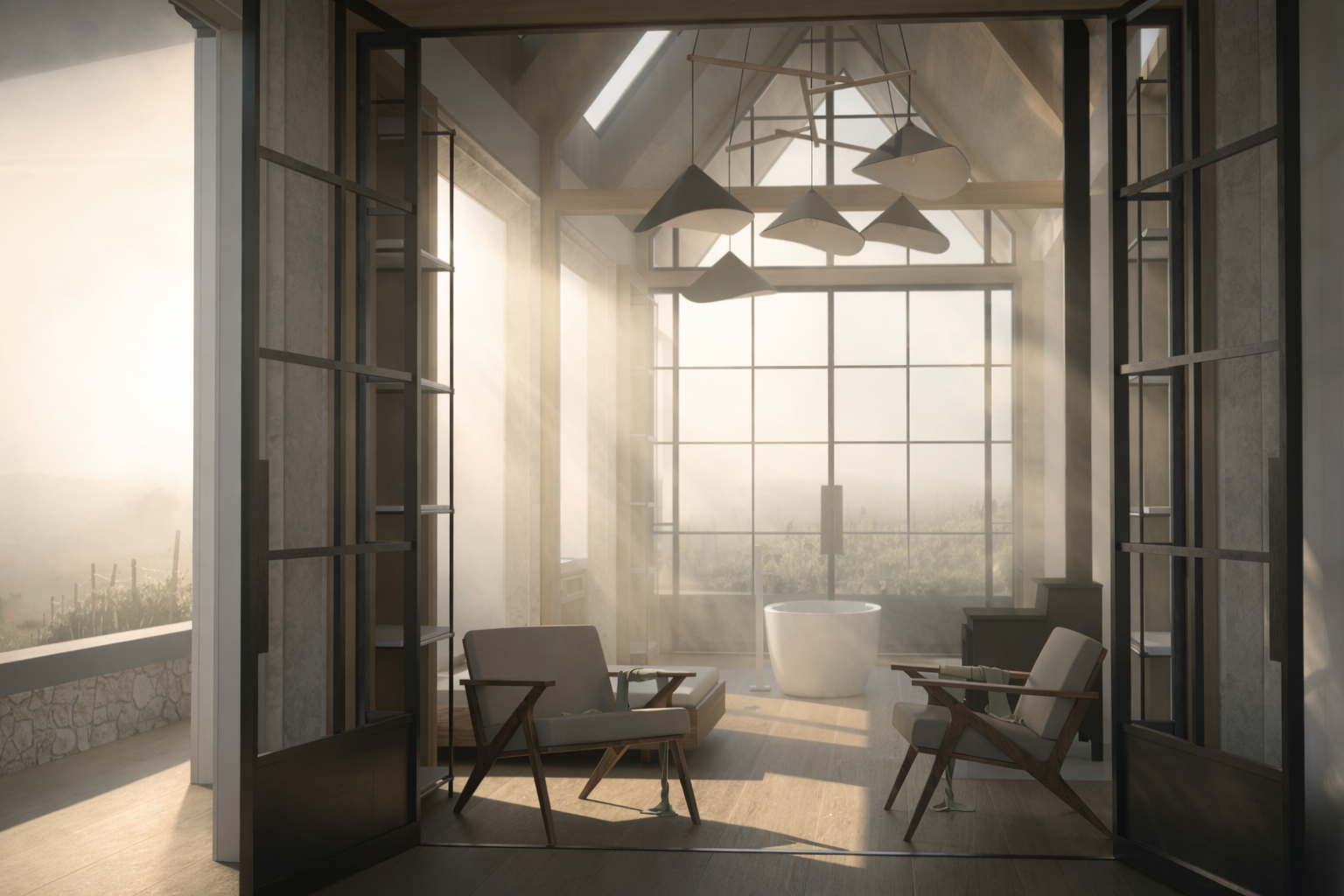
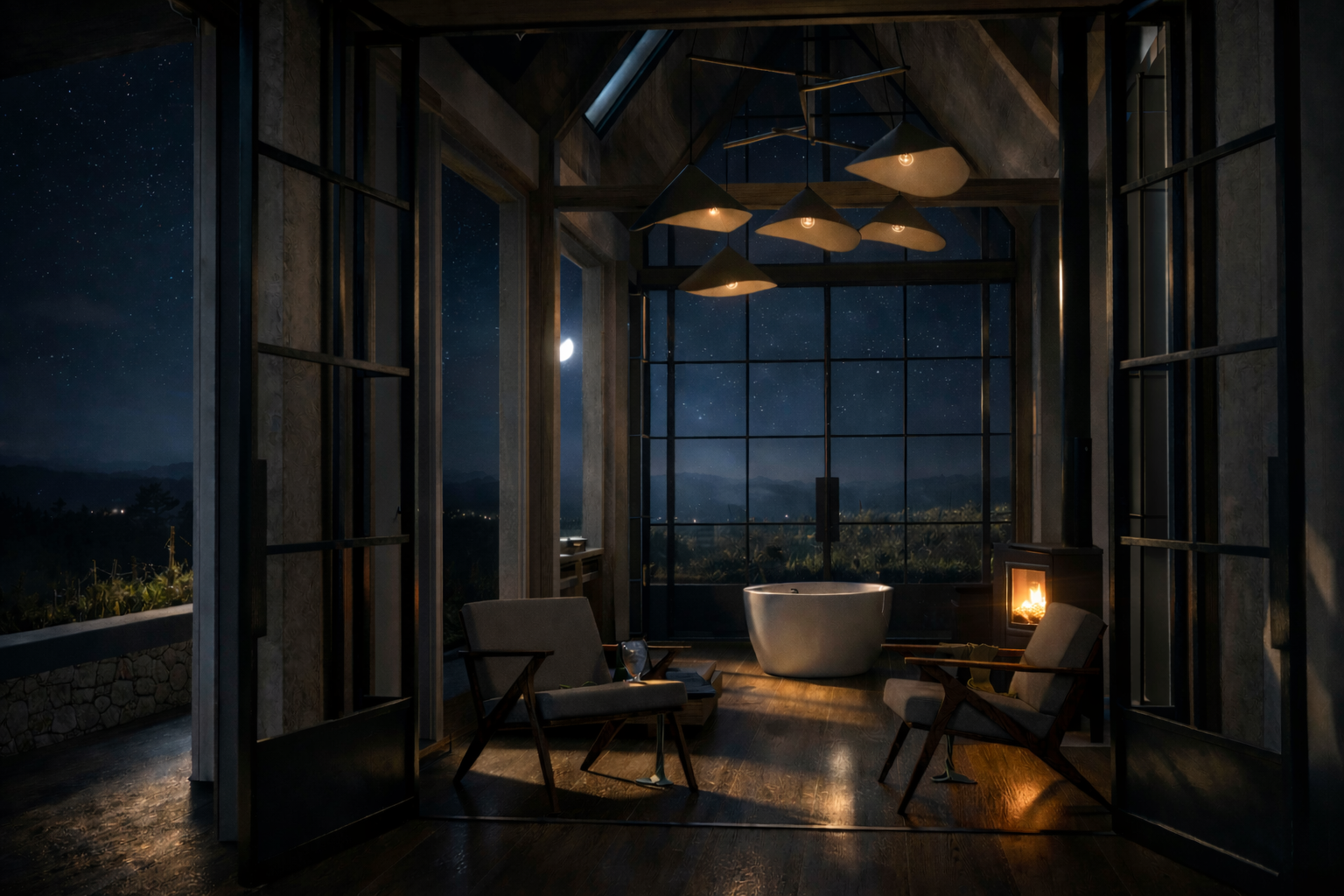
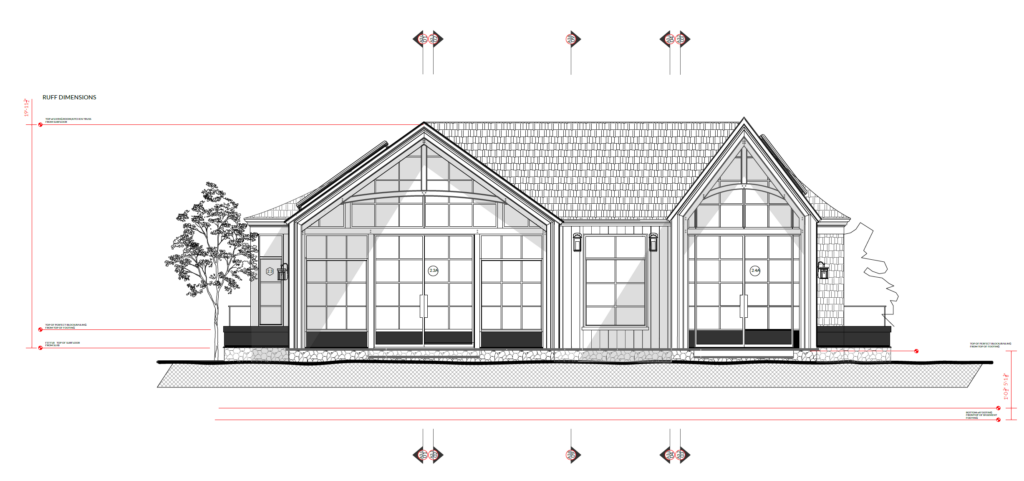
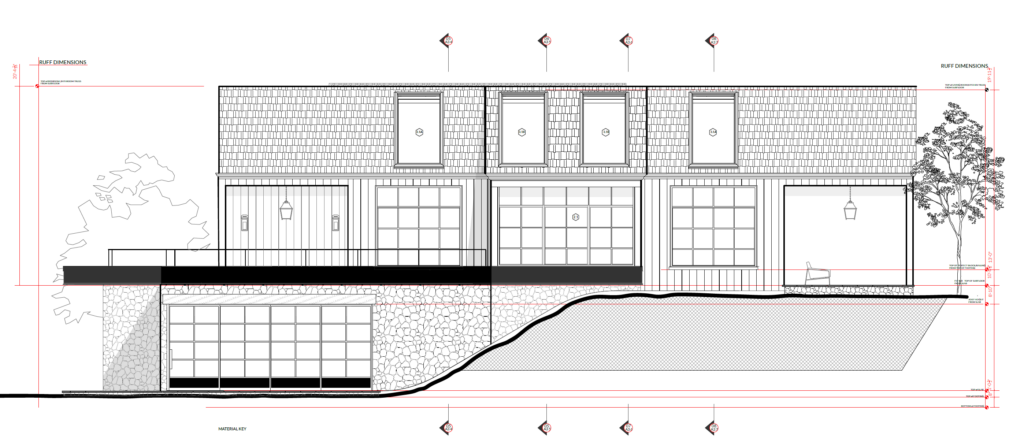
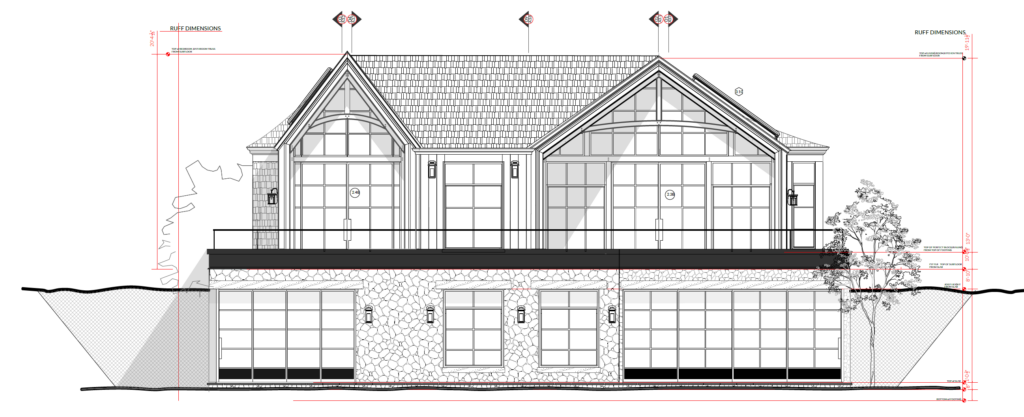
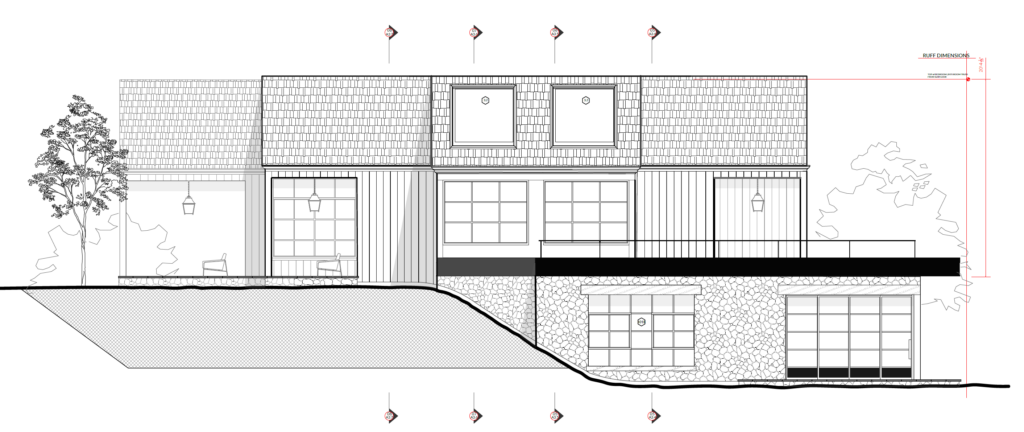
A study in symmetry and high-fidelity assembly. Every plane is engineered to resolve complex structural loads while maintaining a minimal, high-performance aesthetic.
Automated Light Control
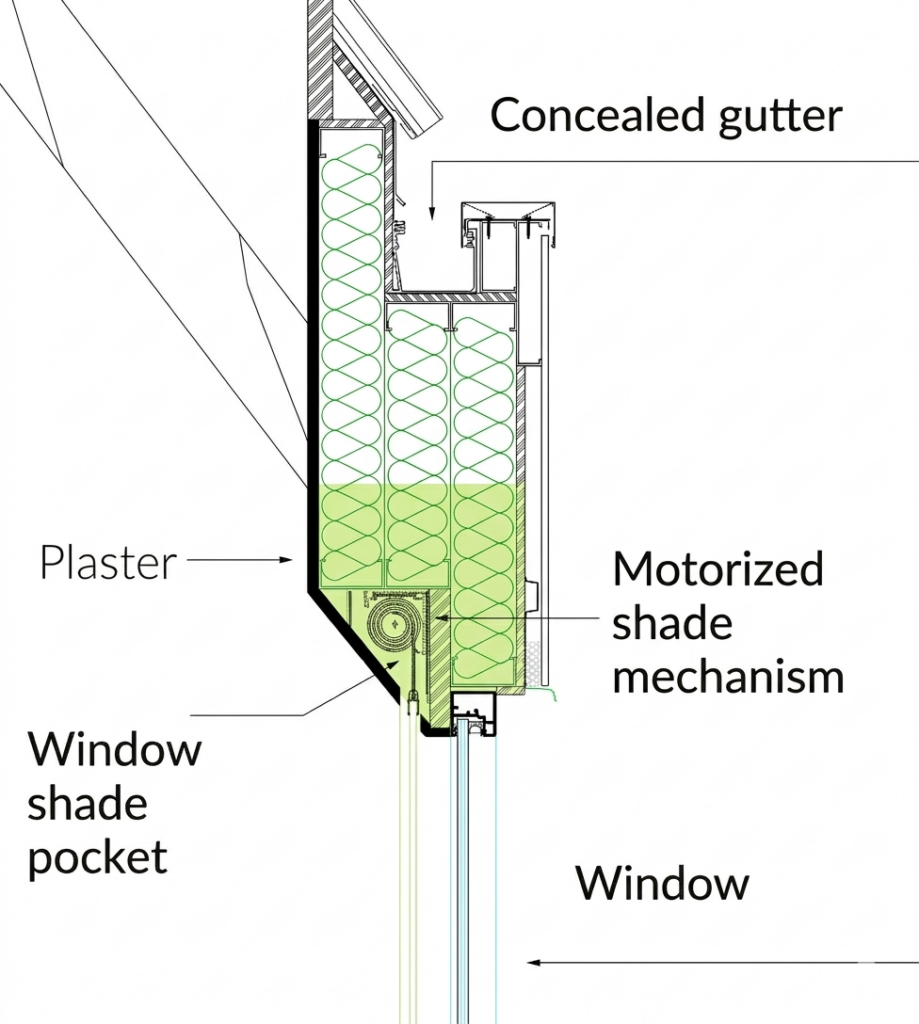
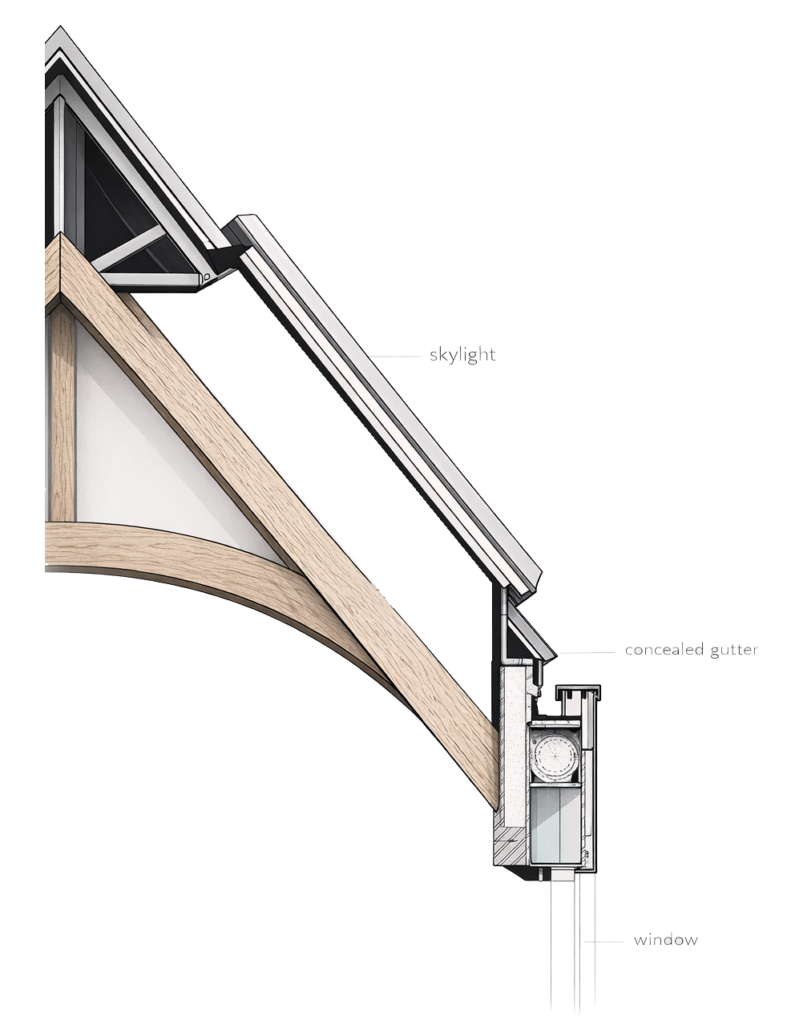
To manage the extensive glass-to-wall ratio, the
Vineyard House
envelope features motorized angled roller shades—custom units engineered to disappear directly into the window mullions.
“The best technology is the kind you never see. It’s not about the shade itself; it’s about the perfect calibration of shadow and clarity.”

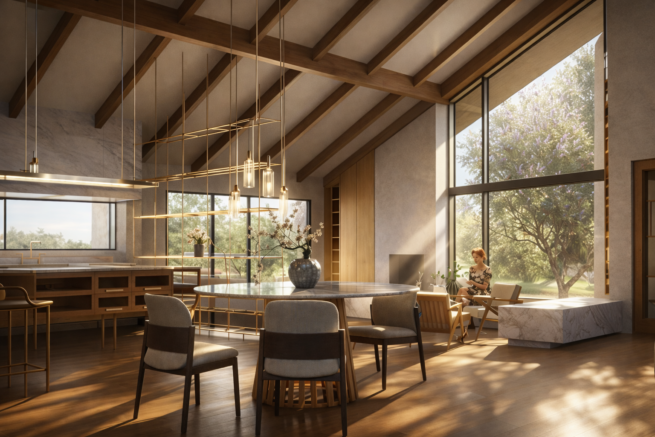
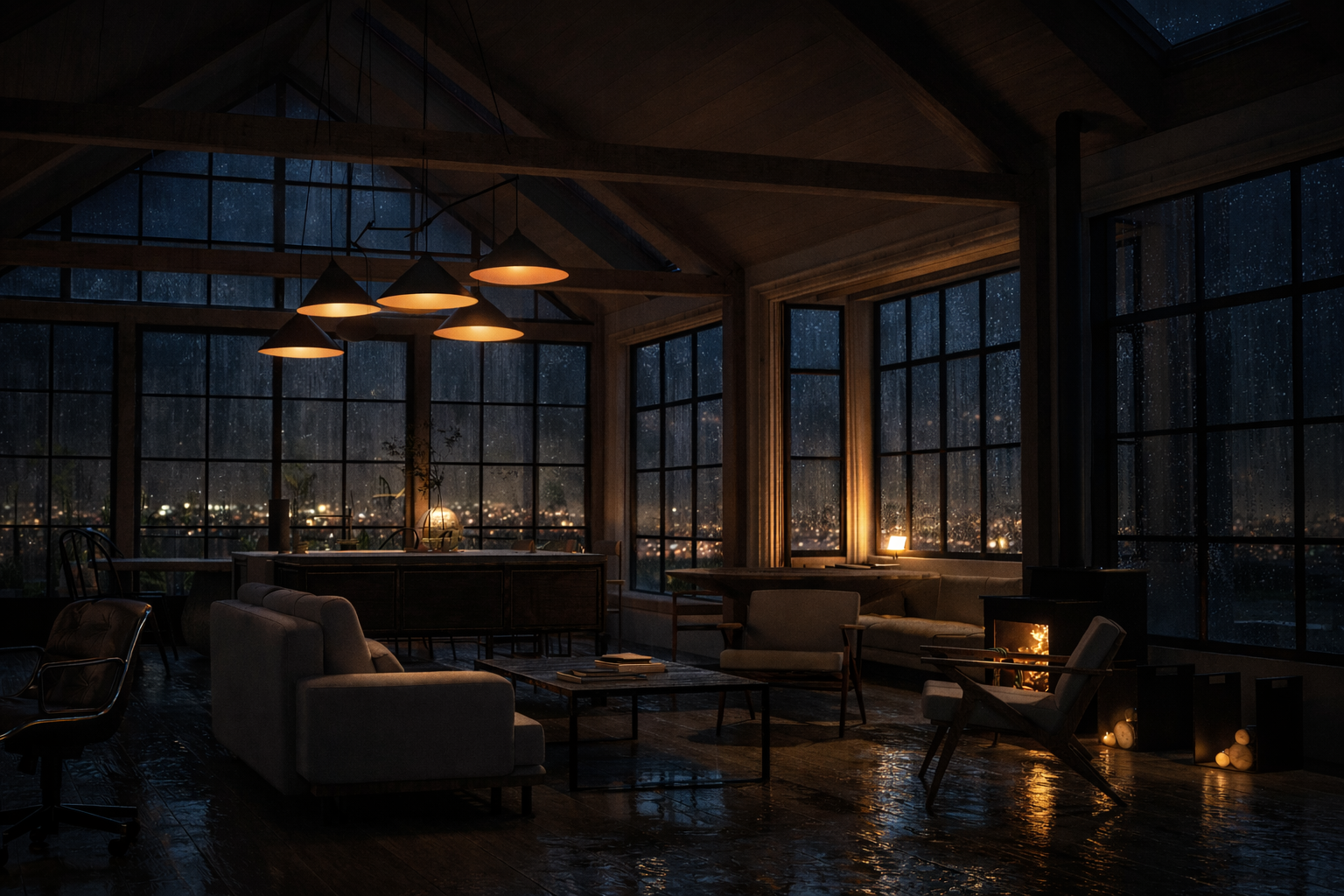
To contrast the surgical precision of the steel frame, the design integrates heavy
Oak Framed Trusses.
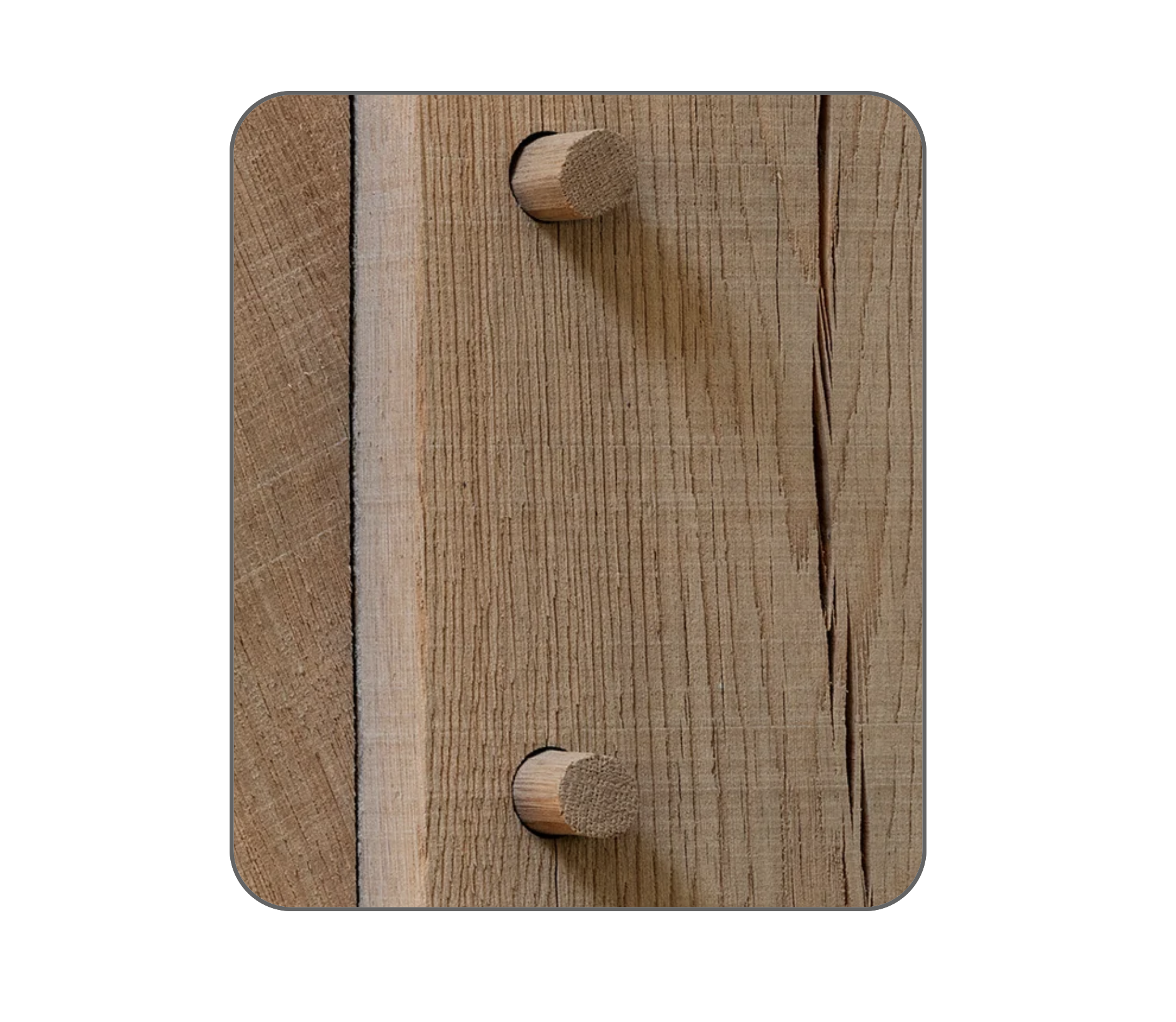
These members provide the characteristic curves and arches of the vaulted spaces, bridging the gap between high-tech building systems and the timeless textures of traditional timber.
The Material Interface
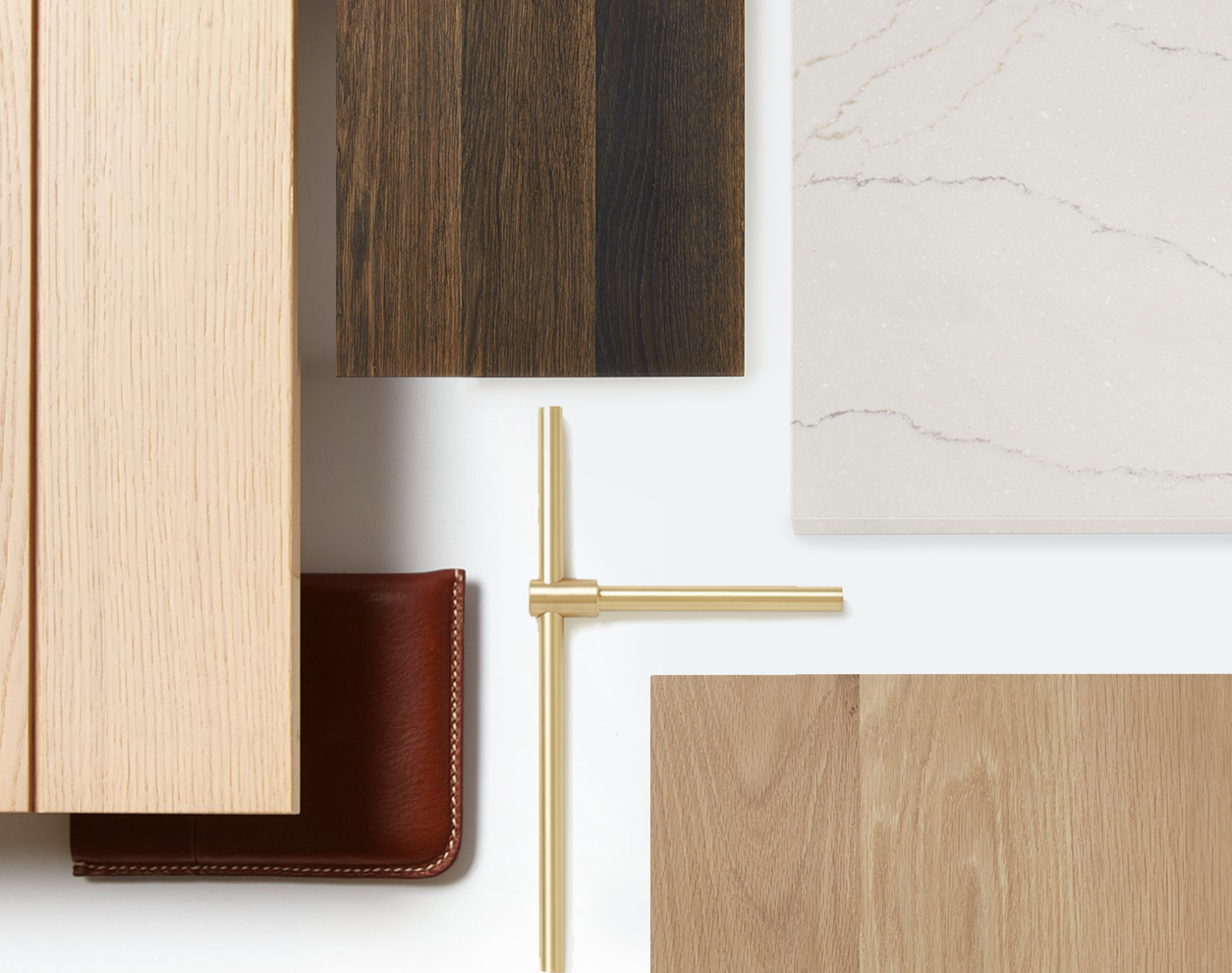
To contrast the surgical precision of the steel frame, the design integrates heavy White Oak Trusses and Honed Marble. This interface bridges the gap between high-performance engineering and the tactile, organic warmth of a home.
Structural Soul
Solid White Oak Secondary Frame
Geometry
Arches & Vaults

Phase 01
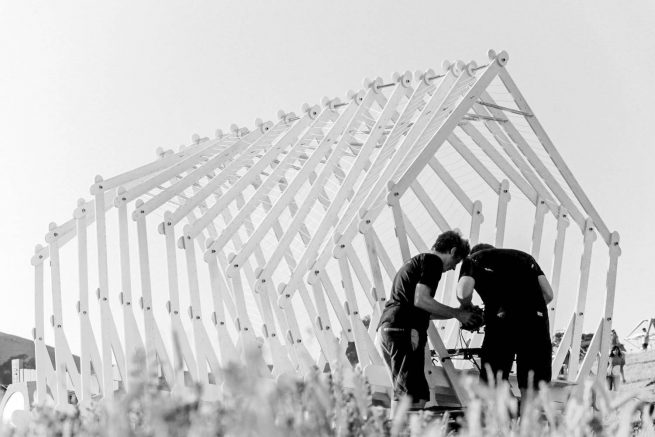
The primary structure utilizes Cold-Formed Steel (CFS) technology, manufactured to tolerances of less than a millimeter.
Every component of the Vineyard House was “printed” from a unified Building Information Model (BIM). This end-to-end manufacturing process ensures that structural steel, custom cabinetry, and glass assemblies align with absolute accuracy before arriving on-site.

Phase 02
For the lower level, we utilized a composite Insulated Concrete Form (ICF) system—creating a continuous thermal break and an impenetrable structural foundation.
Engineered to withstand 250mph winds and magnitude 8.0 seismic events, the substructure serves as the high-performance anchor for the lightweight steel frame above.
Phase 03
Utilizing advanced construction methods (NS Builders standards), the interior storage is elevated into Architectural Furniture. By merging modern durability with historic joinery details, the system resolves the complexities of a high-performance envelope with a refined, tactile finish.

The overarching goal is to leverage building science-based best practices—integrating advanced products, techniques, and assemblies to construct a high-performance, net-positive environment.
Positive Energy Homes are so efficient they produce more energy than they consume. This surplus power can be redirected to support your modern lifestyle—from charging electric vehicles to powering professional-grade tools.
The Vineyard House envelope is so efficient that the solar array produces
55% more power than the home requires for daily operations.

The Vineyard House is a masterclass in building science integration. By merging cold-formed steel precision with heavy timber warmth and net-positive energy goals, the project sets a new standard for sustainable luxury in a modern residential enclave.